Agile vs Traditional Project Management: Key Differences, Benefits, and Use Cases

Starting a new project can feel like mapping your way through some unfamiliar place, where you’re not totally sure what’s under the next bend. You need a straightforward plan to steer the tasks, keep the team budgets in check, and deliver solid results that are both dependable and on schedule. However, picking the correct way to execute is still one of those never-ending discussions in corporate boardrooms.
The big question usually comes down to Agile vs traditional project management frameworks. Picking the wrong setup can derail your entire team, so let us break down how these two popular systems actually work.
What is Agile Project Management?
Agile is a flexible, iterative sort of way to manage projects, it leans on nonstop feedback and close teamwork. Rather than spending time mapping every tiny detail of the plan months ahead, teams often break the work into smaller, easier to understand pieces. These short stretches of work are usually called sprints, they typically last around two to four weeks. By the close of each sprint, the team delivers something working from the project to the client, for check and evaluation so they can judge how it’s going.
This project management framework centers around the main notion that project requirements will change as the work moves forward. You don’t really wait all the way to the very end to show your product to the customer either. Also, this approach leans on self organizing cross functional squads that communicate every day so they can untangle blockers right away, no delay. That whole thing keeps the workflow fast, clear, and strongly aimed at pushing immediate value straight to the end user.
How It Is Different from Traditional Project Management
To understand the core difference between traditional project management and agile, you have to see how they treat change. In the traditional approach, usually tied to the Waterfall model, a project is treated like a linear, downward staircase. You complete one clear phase entirely first, like requirements gathering or designing the blueprints, before moving on to the next phase, or rather “step.” Everything is fixed early, and any deviations from the original intent are heavily frowned upon because changes later become ridiculously expensive.
When comparing Agile project management vs traditional project management, the fundamental philosophy is completely flipped. Traditional setups value predictability, strict documentation, and adhering strictly to a predefined plan. Agile, on the other hand, embraces unpredictability as a normal part of business. It assumes you cannot know everything on day one, making flexibility and customer collaboration far more important than following a rigid paper trail.
Key Differences Between the Two Approaches
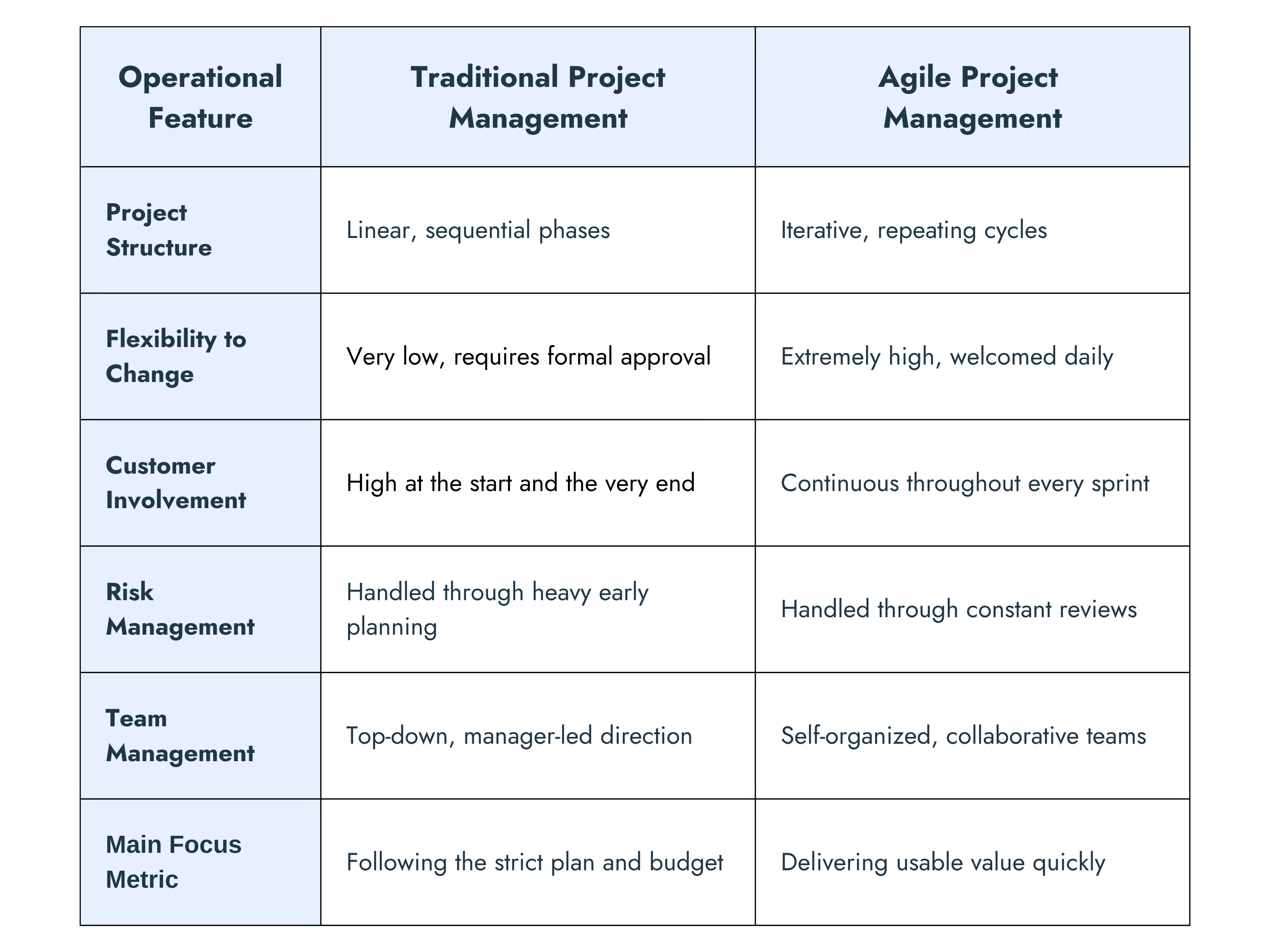
Navigating the difference between Agile and traditional project management is much easier when you compare their core operational traits side by side.
Here is a straightforward breakdown of how these two methodologies match up against each other in real-world scenarios:
- Benefits and Use Cases of Each Framework
Choosing between Agile vs traditional systems depends entirely on what you are building and how much certainty you have about the final outcome. Both frameworks offer distinct advantages when applied to the right corporate situations.
- Benefits of Traditional Project Management Frameworks
This method offers immense clarity and predictability right from the starting line. Because the entire scope is mapped out early, you know exactly what the final cost, timeline, and deliverables will look like. It makes resource budgeting incredibly simple for company executives.
- Best Use Cases for Traditional Teams
This rigid setup is perfect for physical construction projects, manufacturing, or large scale infrastructure deployments. For instance, you cannot build a physical bridge using sprints because you cannot change the foundation halfway through execution.
- Benefits of Agile Project Management Framework
The main Agile project management benefit is its rapid speed to market and high adaptability. Your team can easily pivot based on shifting market trends or direct customer feedback without wrecking your budget. It also reduces total project risk because errors are spotted within weeks.
- Best Use Cases for Agile Teams
This iterative model is the gold standard for software making, mobile app creation, and those creative marketing pushes that need results. When you are launching a new tech application, getting a basic functional version out to users quickly matters more than perfection.
Why Choose Knowlathon for the Right Support
Shifting your organization toward a new operational methodology can feel deeply chaotic if your teams lack proper training. It takes more than just reading a quick article to understand how to run sprints or map out long-term waterfall timelines. That is exactly why we provide comprehensive certification programs at Knowlathon to support your team's professional development.
Our specialized training tracks cover a wide array of globally recognized methodologies, helping you master both classic planning and adaptive team frameworks. We design our learning modules to fit perfectly around your busy corporate schedule, featuring guidance from highly experienced mentors.
Partnering with us at Knowlathon ensures your workforce learns the exact, practical skills needed to execute projects flawlessly. Check out our educational batches today to upgrade your team's capabilities.
FAQs
1. Is agile always better than traditional project management?
No. Agile fits fast-changing software projects, while traditional management is superior for fixed-scope, rigid projects like physical construction.
2. Can you mix agile and traditional project management frameworks together?
Yes. Many modern organizations combine them into a hybrid model, using traditional planning for budgets and agile for execution.
3. What is the biggest drawback of traditional project management?
Its severe lack of flexibility. Making changes late in the sequence requires massive renegotiation and expensive, time-consuming rework.
4. Does agile project management require more customer time?
Yes. It demands continuous collaboration, as clients must provide feedback during regular sprint reviews instead of just at final delivery.
5. Which methodology is easier for beginners to learn?
Traditional management is easier because its linear, sequential flow matches everyday planning, whereas agile requires a complete mindset shift.
Recent Posts