Still Using ITIL® 4? Here’s Why Upgrading to ITIL® 5 Makes More Sense Today
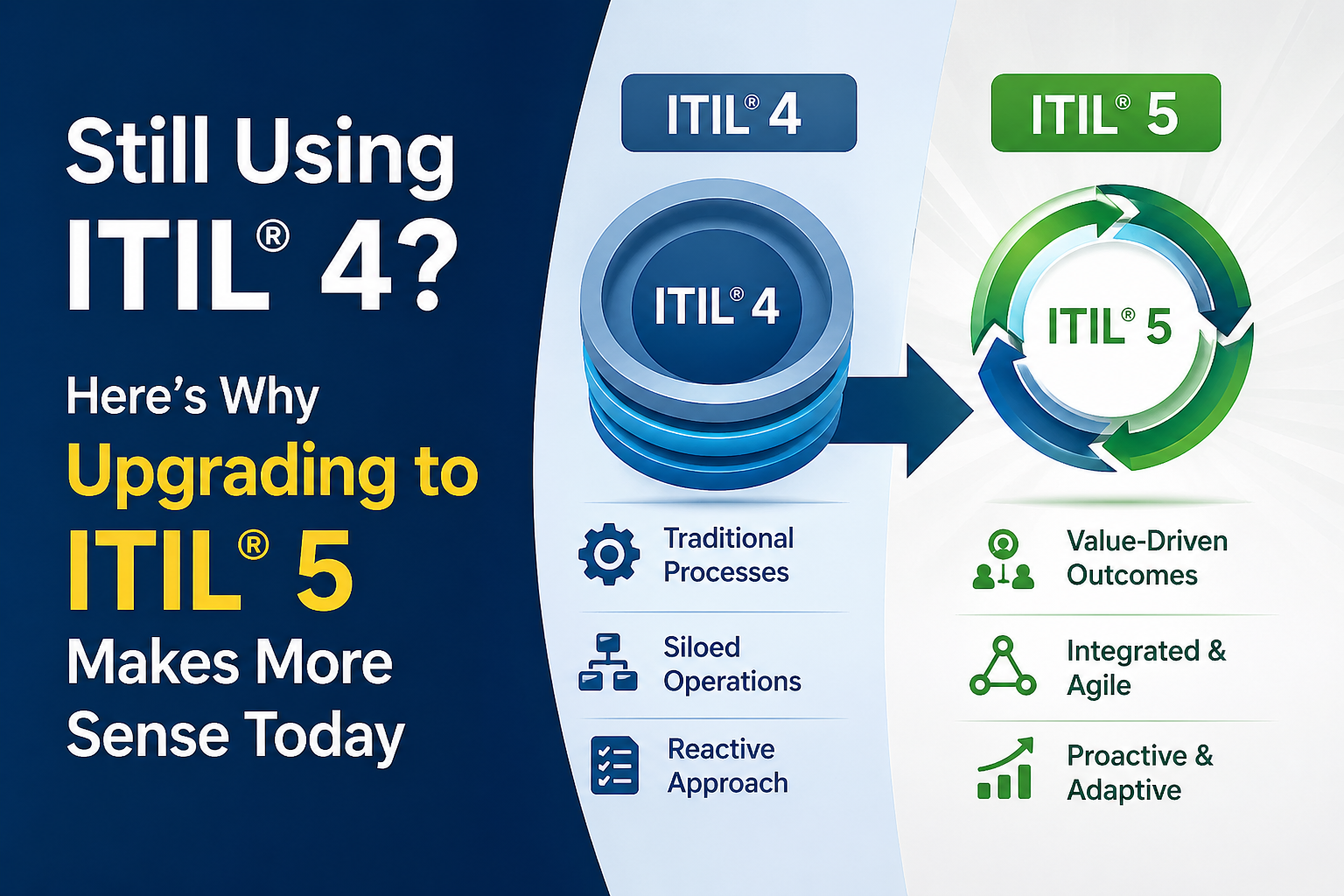
If you’ve been using ITIL® 4 for a while, you already know it made service management more flexible and focused on value. Honestly, it did change a lot, but then again, things in IT rarely stay the same for long. The way organizations build, deliver, and manage services has shifted again, quite noticeably. That’s exactly where ITIL® 5 steps in.
Now, this isn’t about throwing away what you’ve learned so far. It’s more about moving ahead with something that actually fits how things work today. If you’re thinking about your ITIL Certification path or just figuring out your next step, understanding why ITIL® 5 matters can help you make a more sensible choice.
The Shift from ITIL® 4 to ITIL 5: A More Advanced Framework
ITIL® 4, in many ways, felt like something new when it rolled out. It introduced flexibility, better collaboration, and a stronger focus on delivering value. Compared to older, rigid models, it was a big step forward. Still, if you look closely, it stayed somewhat tied to structured frameworks within the traditional ITIL Certification path.
ITIL® 5, on the other hand, feels more in tune with how organizations actually function today. AI, automation, and digital services are already part of everyday work. At Knowlathon, our training is shaped around this exact shift. You don’t just learn concepts; you see how they play out in real situations, while also keeping up with updated ITIL Certification Requirements.
Key Reasons Why Upgrading to ITIL® 5 Makes More Sense Today
ITIL® 5 is not just a version change. It brings in improvements that, quite frankly, feel more relevant now. Here’s why moving forward makes practical sense:
1. AI Governance Is Now Core, Not Optional
One of the biggest shifts is how ITIL® 5 treats AI. It’s no longer a side topic; it’s built right into the framework.
Organizations now need clear policies and controls for using AI responsibly. Earlier ITIL Certification levels didn’t really go this deep, which makes ITIL® 5 much more aligned with current realities.
2. A Unified Lifecycle for Products and Services
ITIL® 5 connects products and services into a single, continuous lifecycle; it’s not fragmented anymore.
From idea to delivery and even improvement, everything flows together. This, in a way, helps teams see the bigger picture and also aligns better with evolving ITIL Certification Requirements.
3. Focus on Long-Term Sustainability
Instead of patching things up again and again, ITIL® 5 leans toward building systems that actually last.
There’s more focus on stability, consistency, and ongoing improvement. Over time, this helps professionals grow within the ITIL Certification path, especially if leadership is something you’re aiming for.
4. Evolution Without Losing Your Progress
A lot of people worry they’ll have to start over, but that’s not the case here. Your ITIL® 4 knowledge still holds value. ITIL® 5 builds on it, which makes the ITIL Managing Professional Transition feel much smoother and, honestly, less stressful.
5. More Practical for Everyday Use
Let’s be real, theory only goes so far. ITIL® 5 focuses more on what actually works in day-to-day roles.
This makes it easier to apply what you learn, especially if you’re juggling work alongside learning. It also makes Management Certification Courses feel more useful, not just something you complete for the sake of it.
6. Expanding Job Opportunities and Emerging Roles
This is where things get interesting. ITIL® 5 is opening up newer roles that didn’t really exist earlier.
You’ll see demand for positions like AI Governance Specialist, Digital Product Manager, and Service Experience Designer. Naturally, this makes the ITIL Certification Path more relevant and gives you flexibility across different ITIL Certification Levels.
Choosing a Future-Ready ITIL® Approach
If you pause and look at where IT service management is heading, it’s pretty clear. Faster delivery, better user experience, and more connected systems. That’s the direction and ITIL® 5 fits right into that space.
At Knowlathon, the idea is to make this shift feel manageable, not overwhelming. The training focuses on real-world scenarios, not just textbook concepts. Whether you’re exploring ITIL Certification Levels or planning your ITIL Managing Professional Transition, you get guided step by step.
Plus, understanding ITIL Certification Requirements becomes a lot easier, so you’re not stuck figuring things out on your own. The goal is simple: learn what actually matters and use it with confidence.
FAQs
1. Is ITIL® 5 better than ITIL® 4?
In many ways, yes. ITIL® 5 feels more aligned with how organizations work today, especially with AI and digital services becoming part of everyday operations.
2. Do I need to start from scratch to learn ITIL® 5?
Not really. Your ITIL® 4 knowledge still counts, so you can continue your ITIL certification path without restarting everything.
3. How does ITIL® 5 impact career growth?
It helps you stay relevant. The focus on business alignment and modern practices makes your profile more appealing for evolving roles.
4. Is ITIL® 5 suitable for beginners?
Yes, it works for both beginners and experienced professionals. The concepts are easier to grasp and more practical.
5. How can I get started with ITIL® 5 training?
You can start with structured programs that guide you step by step. Platforms like Knowlathon make it easier by focusing on real-world learning.
Recent Posts