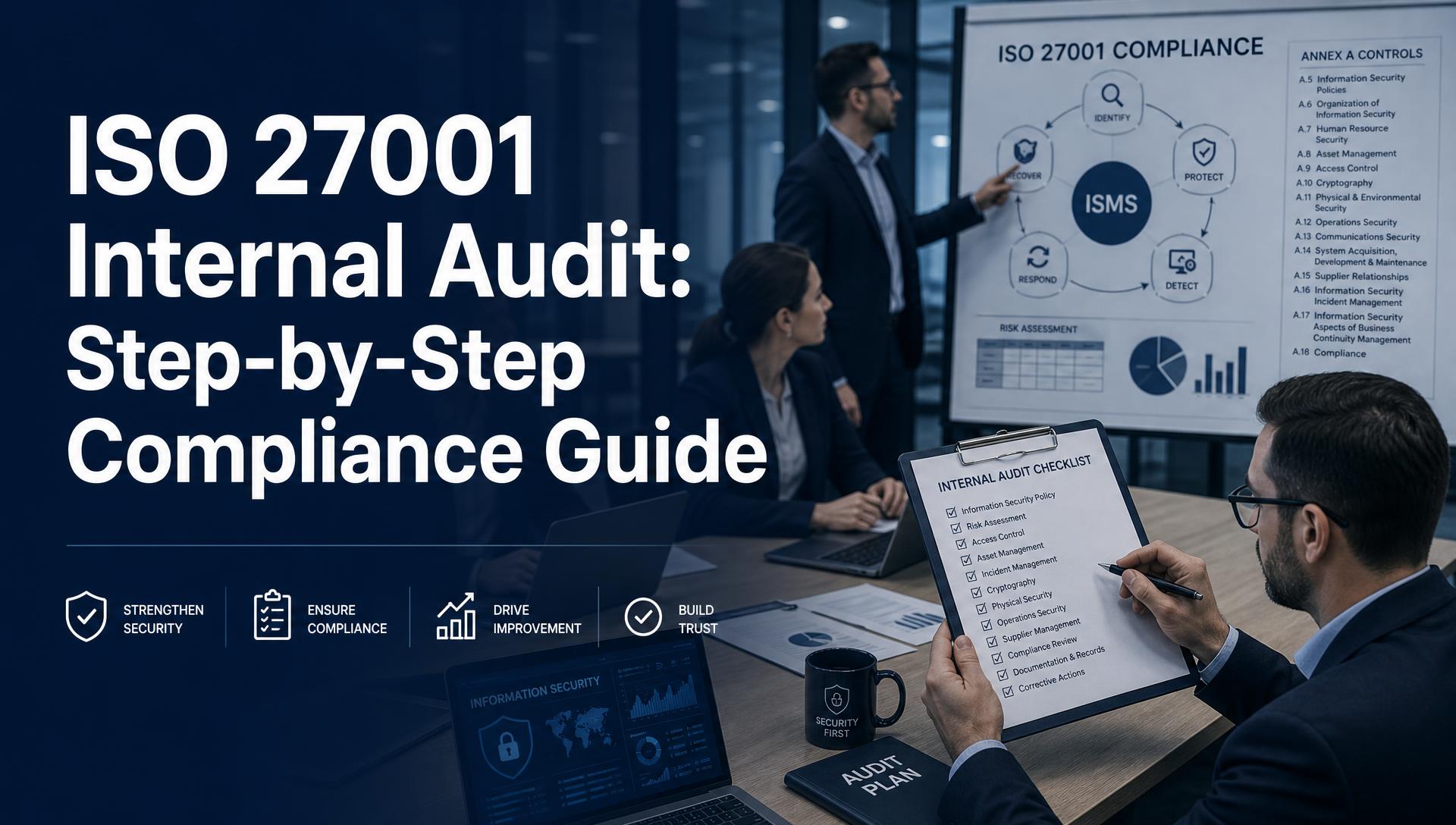
In an era where cyber threats loom larger than ever, organizations worldwide are racing to fortify their information security postures. Enter ISO 27001, the internationally recognized standard for establishing, implementing, maintaining, and continually improving an Information Security Management System (ISMS).
The full enforcement of ISO 27001:2022 and related updates, demand for skilled lead auditors has surged. This guide dives deep into the essentials: from honing ISO 27001 auditor skills to navigating the ISO 27001 lead auditor exam, unpacking the ISO 27001 lead auditor course syllabus, and mastering the ISO 27001 audit process.
Essential ISO 27001 Auditor Skills: Building Your Expertise
Becoming a proficient ISO 27001 auditor demands a blend of technical know-how, soft skills, and practical acumen. At its core, ISO 27001 auditor skills revolve around understanding the standard's clauses and controls while applying them in real-world scenarios.
First, technical proficiency is non-negotiable. You must grasp the ISMS framework, including risk assessment methodologies like those in Annex A of ISO 27001:2022, which outlines 93 controls across four themes: organizational, people, physical, and technological. Skills in identifying threats—such as phishing, ransomware, or insider risks—and mapping them to controls like access management (A.5) or cryptography (A.8) are vital.
But auditing isn't just technical; it's interpersonal. Effective lead auditors excel in communication, conducting interviews that uncover hidden gaps without alienating stakeholders. Active listening, probing questions, and empathetic rapport-building ensure honest responses during site visits.
Analytical skills shine in evidence evaluation. Auditors sift through policies, logs, and incident reports to spot nonconformities, using tools like checklists and sampling techniques. Report-writing prowess is equally key—crafting clear, actionable findings that balance severity with recommendations, all while adhering to ISO 19011 guidelines for auditing management systems.
Ethical integrity rounds out the profile. Lead auditors maintain confidentiality, remain impartial, and navigate conflicts, especially in high-stakes environments like finance or healthcare.
To develop these, start with hands-on simulations in training. Many programs incorporate role-playing audits, where you lead mock teams through a fictional organization's ISMS. Over time, these skills not only pass exams but transform you into a trusted advisor, mitigating risks that could cost millions in breaches.
Decoding the ISO 27001 Lead Auditor Course Syllabus
The ISO 27001 lead auditor course syllabus is designed to deliver comprehensive, actionable knowledge aligned with ISO 27001:2022 and auditing standards like ISO 19011. Typically spanning 40 hours (five days), these courses—offered by bodies like PECB, IRCA, or Advisera—combine lectures, workshops, and exams.
Day one introduces the fundamentals: ISO 27001's structure, including clauses 4-10 (context, leadership, planning, support, operation, performance evaluation, and improvement) and the updated Annex A controls. You'll explore ISMS integration with business strategy, emphasizing risk-based thinking.
Days two and three dive into audit principles. Topics include audit planning—defining scopes, objectives, and criteria—and execution techniques like on-site observations and document reviews. The syllabus stresses nonconformity classification (major vs. minor) and root cause analysis using tools like 5 Whys or fishbone diagrams.
Practical modules cover leading audit teams: delegating tasks, managing time, and resolving disputes. Information security auditor training elements highlight sector-specific applications, such as GDPR alignment for EU firms or HIPAA synergies in healthcare.
By day four, focus shifts to reporting and follow-up. Learn to draft audit reports with executive summaries, evidence matrices, and corrective action plans. Ethical auditing, remote vs. on-site methods, and post-pandemic adaptations (e.g., virtual interviews) are modern additions.
The final day preps for certification, with case studies simulating full audits. Prerequisites often include prior ISO 27001 foundation knowledge, ensuring participants grasp basics before advancing. Post-course, you'll earn a certificate of attendance, paving the way for the exam. This syllabus isn't rote learning—it's a blueprint for leading transformative audits.
Navigating the ISO 27001 Audit Process: Step-by-Step
The ISO 27001 audit process is a systematic journey to validate an organization's ISMS. Guided by ISO 19011, it unfolds in four phases: planning, conducting, reporting, and follow-up.
Planning (1-2 months pre-audit): Define objectives, scope (e.g., full ISMS or specific controls), and team. Review prior audits and risk registers to tailor the checklist. Notify the auditee, schedule interviews, and allocate resources—crucial for lead auditors to ensure efficiency.
Conducting (3-5 days on-site): Kick off with an opening meeting to set expectations. Then, gather evidence: interview process owners, observe controls (e.g., data center access), and sample records like training logs. Use the PDCA cycle to assess continual improvement. Document findings in real-time, flagging nonconformities immediately for transparency.
Reporting (within 2 weeks): Compile a draft report with positives, gaps, and recommendations. Present at a closing meeting, prioritizing actions. The lead auditor signs off, ensuring objectivity.
Follow-up (3-6 months): Verify corrective actions via evidence submission or re-audit. Close out majors before certification.
This process isn't linear—iterations refine it. In 2025, with hybrid work, auditors increasingly leverage digital tools like audit software for remote evidence collection, enhancing the ISO 27001 audit process's agility.
Mastering the ISO 27001 Lead Auditor Exam: Prep Strategies
The ISO 27001 lead auditor exam tests your ability to apply knowledge under pressure. Formats vary: PECB's is a 3-hour essay-style with scenarios requiring audit plans or nonconformity analyses; multiple-choice options from IRCA last 2 hours with 40 questions.
To prep, review the syllabus thoroughly—focus on clauses 6 (planning) and 9 (evaluation). Practice with mock exams from providers like Advisera, aiming for 70% pass rates. Time management is key: allocate 5-7 minutes per question.
Study resources include the ISO 27001:2022 standard (buy from ISO.org), ISO 19011, and case studies. Join forums like LinkedIn groups for tips. Simulate exams weekly, then debrief errors. Report-writing drills build depth—practice concise, evidence-based narratives.
Enroll in accredited courses for structured prep, including exam simulators. Post-exam, results arrive in weeks; retakes are allowed after 30 days. Success here unlocks ISMS lead auditor certification, validating your readiness.
ISMS Lead Auditor Certification and Cyber Security Compliance
Earning the ISMS lead auditor certification—often via Exemplar Global or PECB—marks you as a qualified pro for third-party audits. It's renewable every three years with CPD points from audits or training.
This ties into cyber security compliance certification, as ISO 27001 underpins frameworks like NIST or SOC 2. Information security auditor training emphasizes compliance mapping, ensuring audits support broader regs like CCPA.
The ISO 27001 2025 Update: What It Means for Auditors
The ISO 27001 2025 update primarily enforces the 2022 revision's transition deadline: October 31, 2025. Organizations on the 2013 version must upgrade, introducing 11 new controls (e.g., threat intelligence, secure coding) and reorganizing Annex A. Auditors must now assess cloud threats and supplier risks more rigorously, with amendments enhancing AI and supply chain focus. Relatedly, ISO/IEC 27701:2025 bolsters privacy controls, integrating with 27001 for holistic PII management. For lead auditors, this means upskilling in these areas to guide seamless transitions.
Career Growth and Market Trends: The Road Ahead
ISO 27001 lead auditor certification catapults careers into high-demand realms. Entry-level auditors earn $70K-$90K USD annually, but leads command $110K-$150K, with seniors hitting $180K+ in consulting. Paths include internal audit manager, compliance officer, or freelance consultant—roles exploding in fintech and healthcare.
Market trends in 2025 amplify this: Cyber incidents rose 15% YoY, per Verizon DBIR, spiking demand for auditors. With 2022 transitions mandatory, firms seek experts for gap analyses. Remote auditing and AI tools create niches, while ESG integration ties ISMS to sustainability audits.
Future-proof by stacking certs like CISA or CISSP. Networking via ISACA chapters opens doors. In a $200B cybersecurity market, lead auditors aren't just compliant—they're strategic assets driving resilience.
Wrapping Up: Your Path to Infosec Leadership
ISO 27001 Lead Auditor Training isn't a checkbox; it's a launchpad for safeguarding digital futures. From mastering auditor skills and the audit process to acing the exam and embracing 2025 updates, this journey equips you for impact. As cyber threats evolve, so does the need for certified pros in ISMS and compliance.