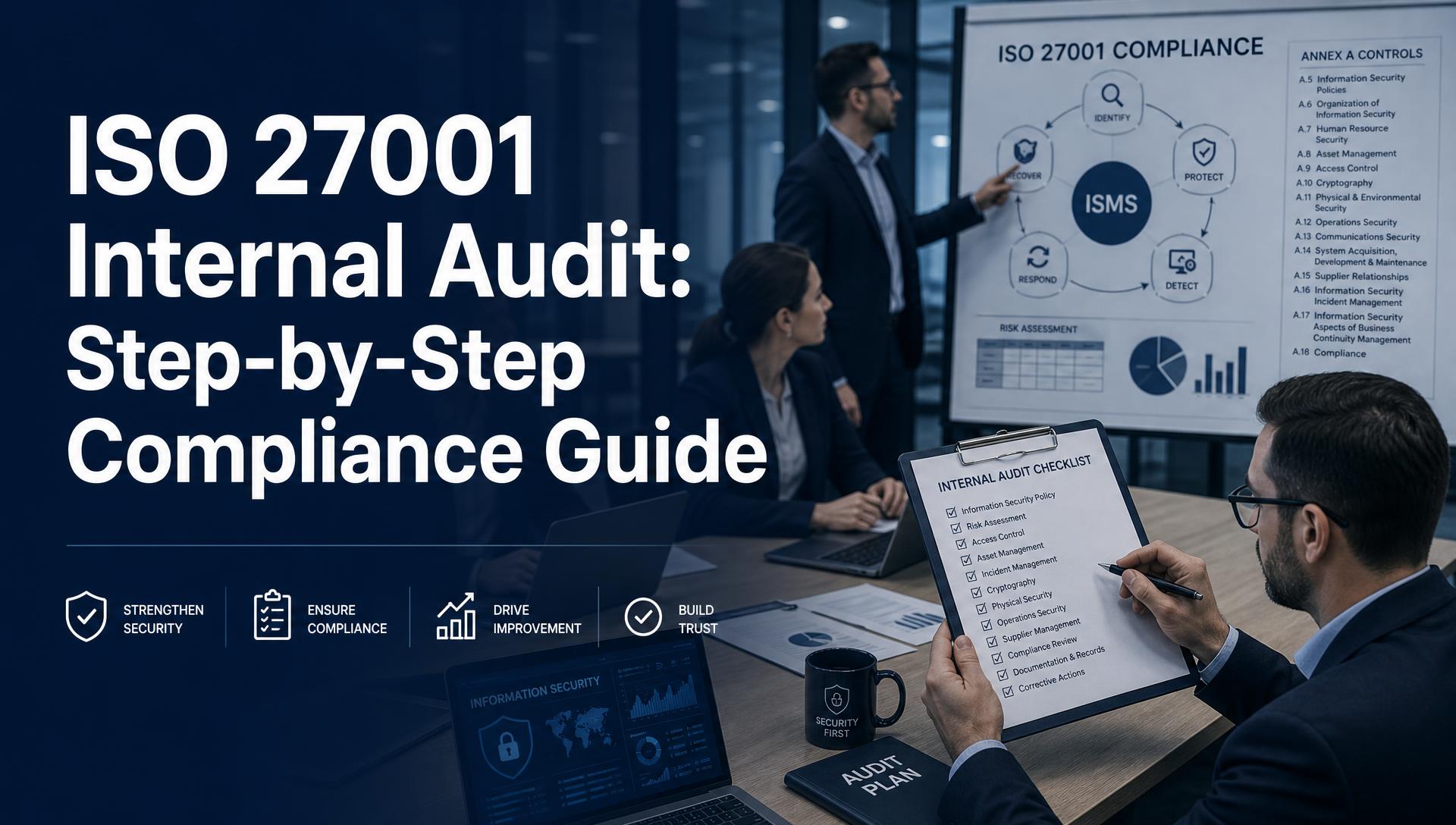
Most organizations build an Information Security Management System (ISMS) and eventually someone asks the obvious question: “Does this thing actually work?” That’s what an ISO 27001 internal audit exists to answer. It isn’t a formality to check a box before certification. It’s your chance to find the cracks before an external auditor does, or before someone with worse intentions finds them for you.
This guide covers what an ISO 27001 internal audit actually involves, how to run one with a practical checklist, and why so many teams underestimate how useful this process can be.
What Is an ISO 27001 Internal Audit?
An ISO 27001 internal audit is basically a self-check of your ISMS. Your own team can run it, or you can bring in an independent third party if nobody in-house is impartial. Either way, the goal is the same: figure out if your security controls line up with the ISO 27001 standard, and whether they hold up in real day-to-day use. This isn’t optional. Clause 9.2 makes it a requirement, so if you’re pursuing or maintaining certification, you have to run this at planned intervals, usually once a year, with proper records kept.
An internal audit and a certification audit aren’t the same thing though. A certification audit is run by an accredited outside body, confirming your ISMS conforms to the standard so you can get, or keep, your certificate. The internal audit is about effectiveness — your chance to find problems on your own terms, without a certification decision riding on the outcome.
When done properly, it becomes an early warning system, catching stale policies, forgotten access permissions, and process gaps before they turn into real findings during a formal audit.
Step-by-Step Guide to Identifying Compliance Gaps and Improving Security
There’s no shortcut here. A solid ISO 27001 audit process follows a sequence, starting with scope and ending with a report that gets acted on. Here’s how each stage plays out, along with what belongs in your ISO 27001 audit checklist at each point.
1. Define the Scope and Objectives
Before anything else, figure out what the audit will cover. One department? A single system? The whole company? Go back to your Statement of Applicability and risk register so the scope matches the controls you’ve committed to. A tight scope saves you from wasting time where it isn’t needed.
2. Build Your ISO 27001 Internal Audit Checklist
This is where the plan turns into something usable. Your ISO 27001 internal audit checklist should map to Annex A controls and whatever clauses apply — things like access control, asset management, incident response, supplier relationships, and physical security. For each item, note what evidence you’ll need and who’s responsible. Without this, the audit tends to drift.
3. Assign Auditors and Confirm Independence
ISO 27001 audit requirements are clear on one thing: auditors can’t review their own work — that’s a conflict of interest. If your team is small and everyone’s tied to the ISMS somehow, bring in an outside consultant instead. Whoever runs it, set roles and timelines before fieldwork starts.
4. Conduct Document Review
Start by reading through what already exists: policies, procedures, risk assessments, past audit reports. It sounds tedious, but this step alone often turns up gaps, outdated documents, and controls that exist on paper but were never formalized.
5. Perform Fieldwork: Interviews and Evidence Gathering
This is where the real work happens in an ISO 27001 compliance audit. Auditors talk to control owners, watch how processes actually run, and gather evidence like access logs, training records, and change management tickets. The point is to see whether policy matches practice. Usually, the gap between the two is where the most useful discoveries happen.
6. Analyze Findings Against the Standard
Once you’ve got your evidence together, hold it up against ISO 27001’s requirements and your own internal policies. Sort each issue into a category — nonconformity, observation, or improvement opportunity — so leadership knows what needs attention now versus later.
7. Document ISO 27001 Audit Findings
Every issue you spot should be written down clearly: what happened, which clause or control it ties to, what evidence backs it up, and how serious it is. Solid ISO 27001 audit findings become the backbone of your corrective action plan, and they’ll help the next time you audit too.
8. Report to Management and Track Remediation
Pull everything into a report for leadership, with a summary, detailed findings, and recommendations. Clause 10.1 requires nonconformities to be tracked until resolved, so assign owners and deadlines for each one and don’t let them sit.
Why Partner with Knowlathon for Your ISO 27001 Internal Audit
Running an ISO 27001 internal audit properly takes more than checking boxes off a list. It takes people who’ve sat across from auditors before, who know what certification bodies flag, and who’ve seen where organizations tend to trip up. At Knowlathon, our experts bring that hands-on experience to the table, helping teams scope audits the right way, build checklists that genuinely map to Annex A controls, and ask questions that surface real gaps instead of rehearsed answers.
We don’t stop at the audit report either. Findings only matter if something gets done with them, so we work with your team to prioritize fixes, set realistic timelines, and put together documentation that’ll actually hold up under outside scrutiny.
Whether this is your first certification cycle or your fifth year of maintaining compliance, our goal is simple: make the internal audit something that genuinely strengthens your security, not just paperwork you get through.